.png?sfvrsn=8865c34e_9)
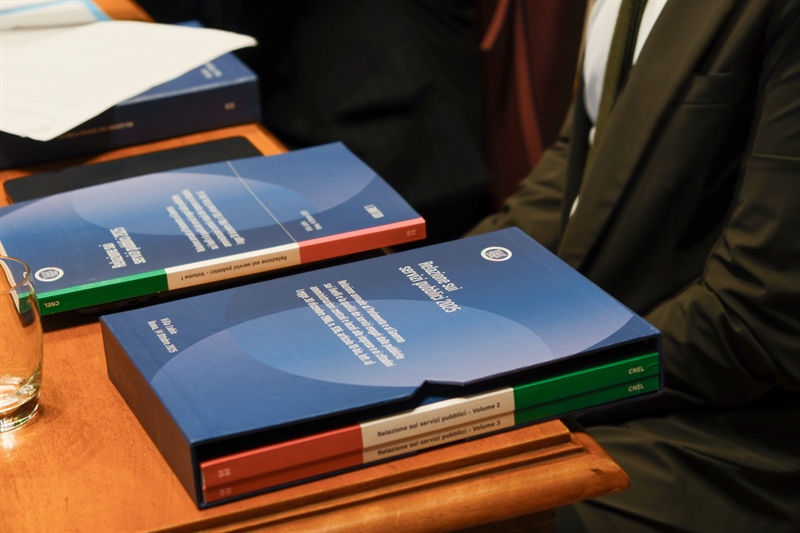
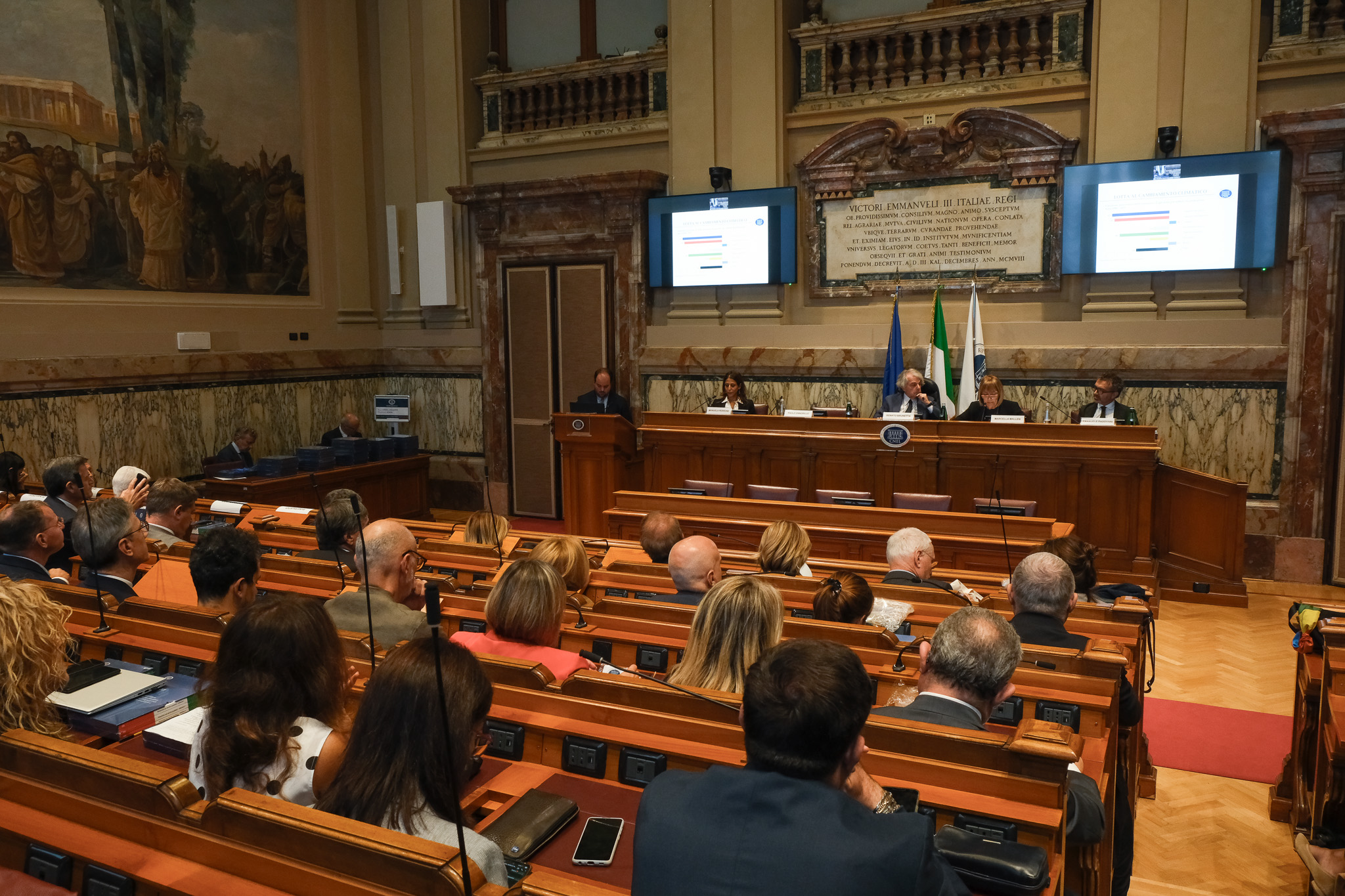
The Annual Report on the levels and quality of services provided by central and local public administrations to businesses and citizens (click here for the Report - italian version only) was presented at Villa Lubin. The Report, prepared by the CNEL (National Council for Economics and Labour), has been submitted to Parliament and the Government in accordance with Law No. 936/1986.
PUBLIC SERVICES: CNEL – SIGNIFICANT PROGRESS, BUT GAPS AND DELAYS REMAIN
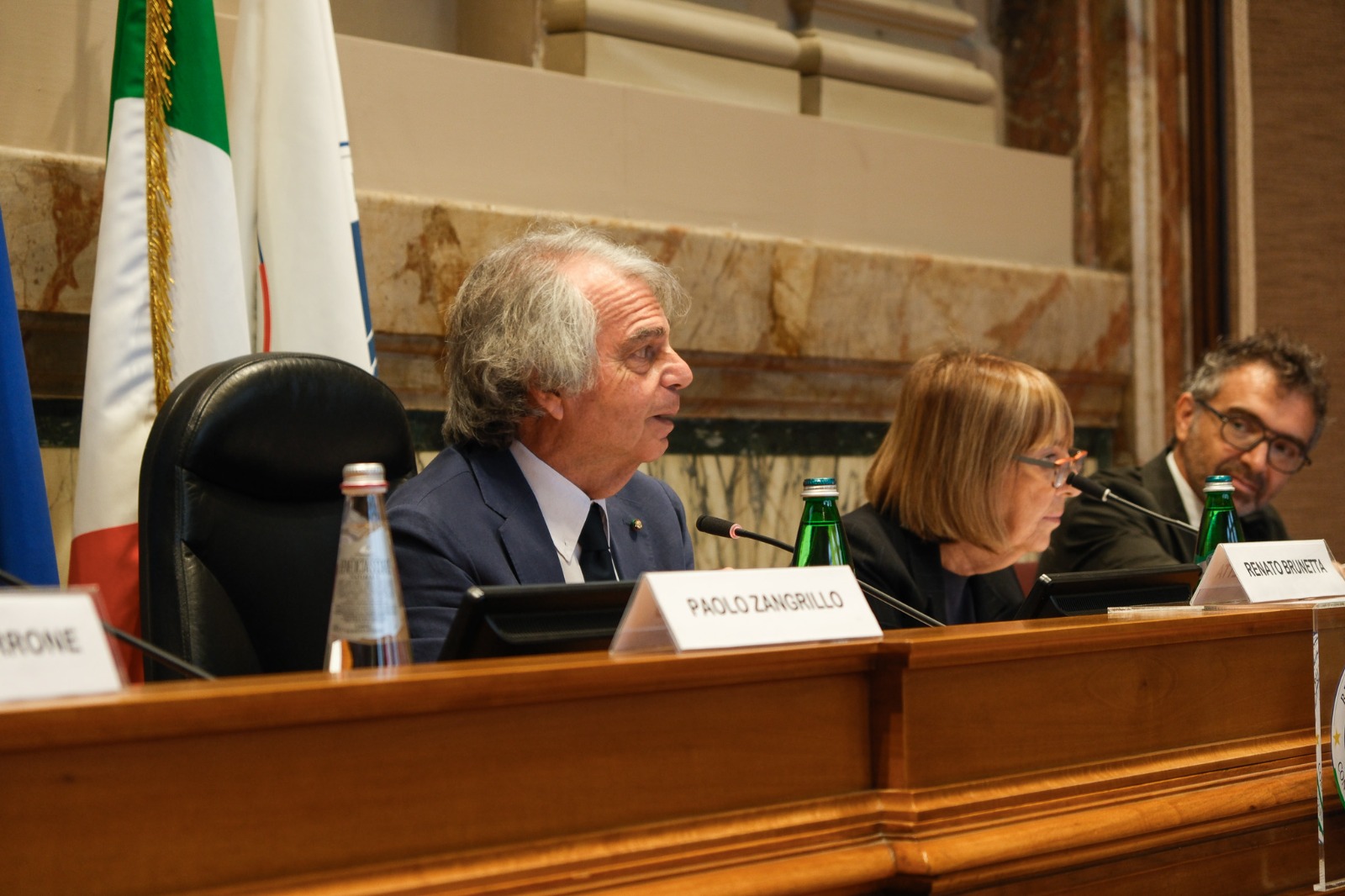
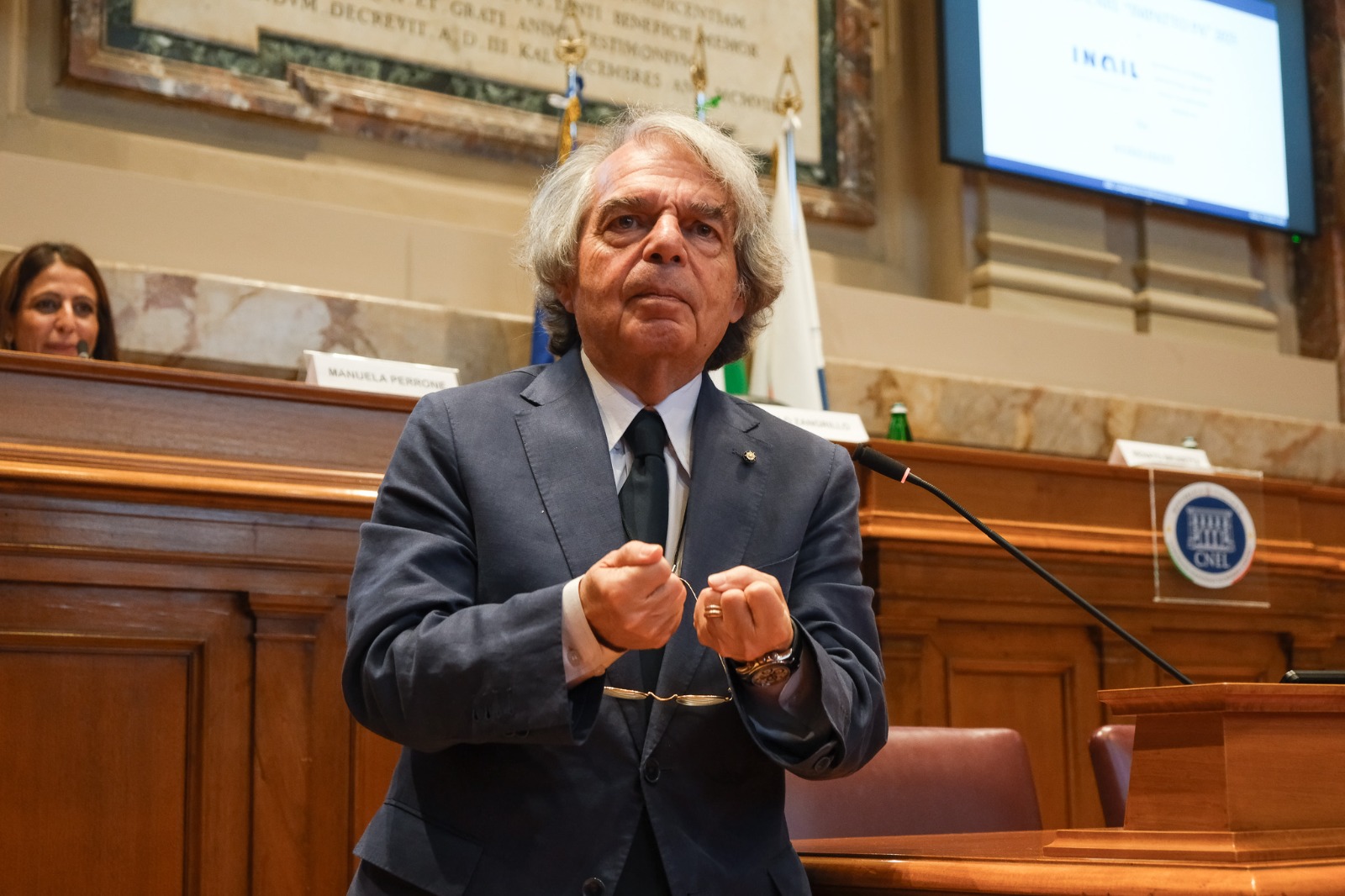
The overall picture of public services in Italy presents a complex and varied scenario: progress continues across many areas of the public administration, yet territorial disparities and certain delays compared with other European countries persist. This situation calls not for a change in the direction or in the ongoing reform efforts of the Public Administration, but rather for an acceleration in tackling the remaining challenges concerning access to and quality of services. These are the findings of the Annual Report to Parliament and the Government on the levels and quality of services provided by central and local public administrations to businesses and citizens, prepared by the CNEL (National Council for Economics and Labour) and presented today at Villa Lubin, in the presence of CNEL President Renato Brunetta, the Minister for Public Administration Paolo Zangrillo, and the State Accountant General Daria Perrotta.
- Education
EARLY CHILDHOOD SERVICES: INCREASES IN BOTH EXPENDITURE AND OUTPUT
Among the areas of improvement highlighted by CNEL, early childhood services stand out, showing strong performance this year, partly due to the significant boost provided by the National Recovery and Resilience Plan (NRRP), with 90% of allocated resources now activated.
In the 0–6 early childhood education and care system, despite a new record low in birth rates, both expenditure and service provision have increased. The proportion of children under three accessing nurseries and supplementary services has risen to 38.5% (compared with 25.5% in 2012). However, substantial territorial disparities persist. With regard to educational staff, numbers grew by 17% between 2018 and 2023.
SCHOOL DROP-OUTS FALL BELOW 10% FOR THE FIRST TIME
Demographic decline has had a significant impact on the primary and secondary education system, with enrolments falling by over 300,000 between 2019 and 2024. Among the positive developments is the school drop-out rate, which shows clear signs of improvement: in 2024, 9.8% of young people aged 18–24 left education early. This is the first time the figure has fallen below 10%, marking a historic milestone, particularly when compared with 22.9% in 2004. The number of NEETs (young people Not in Education, Employment, or Training) has also declined, with the rate dropping to 15.2% (from 22.1% in 2019). Additionally, the number of high school graduates has increased, further demonstrating the progressive improvement of the system. There is also a general trend towards higher educational attainment among the adult population aged 25–64: the percentage of 25–64-year-olds holding at least an upper secondary school diploma rose to 66.7% in 2024, compared with 62% in 2019.
GROWTH IN UNIVERSITY GRADUATES AND DOCTORAL STUDENTS
In the university sector, the CNEL Report highlights that over the past five years the Ordinary Financing Fund (Fondo di Finanziamento Ordinario, FFO) has increased by 6.3%. Expenditure on tertiary education stands at 0.4% of GDP, compared with the EU average of 0.8%. Between 2019 and 2023, the number of university graduates grew by 14.5%, reaching 393,000 in 2023.
More than one in three graduates (36.4%) obtained a degree in the fields of economics, law, or social sciences, while just over one in four (26.1%) graduated in STEM disciplines (science, technology, engineering, and mathematics). In the latter group, nearly two-thirds of graduates are male. In research, the number of doctoral students rose to 41,000, representing a 30% increase over two years, partly driven by the National Recovery and Resilience Plan (NRRP).
Notably, online universities have seen remarkable growth: enrolments have tripled between 2018 and 2024, reaching 250,000 students, equivalent to 20% of the total.
CHALLENGES IN SKILLS AND SCHOOL-TO-WORK TRANSITION
The CNEL Report highlights persistent challenges in the education sector, particularly the gap between the skill levels of Italian students and the OECD average, which is most pronounced in the southern regions. Disparities are also evident in the employment rate of Italian graduates three years after graduation, at 74%, compared with an EU average of 82%. The school-to-work transition remains a critical issue, alongside weaknesses in career guidance. Furthermore, only 9% of adults aged 25 to 64 participate in continuing education and lifelong learning activities.
- Healthcare
HEALTH SECTOR SHOWS BOTH STRENGTHS AND WEAKNESSES
Among the various sectors – notes CNEL in the Report on Public Services – the “health and wellbeing” sector exemplifies a landscape characterised by both progress and ongoing challenges. Significant regional and subregional disparities persist, affecting both the quantity and quality of services, and highlighting infrastructural weaknesses in several parts of the country.
On the positive side, life expectancy has returned to pre-Covid levels, cancer mortality has declined, public health spending has increased slightly, and the workforce of nurses and midwives has been strengthened. Health outcomes have also improved for older adults with chronic conditions, as well as for adolescents in terms of mental wellbeing.
SHORTAGE OF GENERAL PRACTITIONERS AND NURSES PERSISTS
On the challenges side, there have been increases in deaths from neurological diseases, obesity, and road traffic accidents. The number of general practitioners continues to decline. Shortages of personnel are also evident in emergency and urgent care services. The deficit of nurses compared with the European average exceeds 180,000. An increasing number of young professionals are choosing to work abroad or in the private sector, a “brain drain” that could undermine the sustainability of the public health system in the coming years, particularly in the most vulnerable regions.
PRIVATE HEALTHCARE EXPENDITURE REACHES 25%
Over the past decade, national healthcare demand has increased by approximately €24 billion, with an average annual nominal growth of 2.0%, equivalent to 0.2% in real terms. Regarding public funding, in 2023 Italy’s share of healthcare expenditure stood at 74%, compared with a European average of 77.3%. For many years, Italian households have increasingly chosen to spend privately on healthcare. Private healthcare expenditure has reached €42.6 billion per year, accounting for around 25% of total national healthcare spending.
SPECIALIST VISITS AND EXAMINATIONS SHOW A NOTICEABLE DECLINE
The use of specialist visits and examinations has shown a noticeable decline over the past five years. From 2018 to 2023, specialist examinations fell by an average of 2%, while specialist visits declined by 1.7%. In 2024, nearly 10% of residents forwent specialist visits or examinations, an increase of 2.4 percentage points compared with 2023, and 3.6 points above the pre-pandemic level. The main reasons cited were long waiting lists (6.8%, up 2.3 points compared with 2023) and difficulties in affording healthcare services (5.3%, up 1.1 points compared with 2023). The latter figure is particularly significant: in 2024, 23.9% of individuals (up 4 points compared with 2023) covered the full cost of their most recent specialist service without any reimbursement from insurance.
- Circular economy
WASTE: INCREASE IN RECYCLING
Services related to the circular economy are improving, with the implementation of numerous operational measures, ranging from green public procurement to integrated waste management and the creation of green jobs. The share of separate waste collection rose to 66.6% of national production in 2023, an increase of 1.4 percentage points compared with 2022. In terms of resource-use efficiency, Italy performs above the European average.
ITALY AMONG EU COUNTRIES WITH STRONGEST PERFORMANCE IN THE CIRCULAR ECONOMY
The CNEL Report on public administration services highlights Italy’s position among European countries with the strongest performance in the circular economy, thanks in particular to increasingly sustainable and advanced waste management practices. In 2023, the country achieved a resource circularity rate well above the EU average, consolidating its leadership in Europe in terms of efficient material use. In 2022, €3.7 of gross domestic product were generated for every kilogram of material consumed, compared with the EU average of €2.5/kg.
TOURISM RECOVERY BRINGS ENVIRONMENTAL IMPACTS BACK UP
Another notable achievement concerns the 331 Italian cities, representing a total population of around 7.2 million, which have adopted a “zero waste” programme strategy, and the 70% of public tenders that include environmental criteria, with a combined value of over €5.2 billion. Within this context, however, some critical issues have emerged linked to the post-pandemic recovery of tourism, which has driven environmental impacts back up, particularly regarding tourism-related waste: from 4.7 kg per capita in 2020 to 6.6 kg in 2021, reaching 9.3 kg in 2022.
- Business services
BUSINESS SERVICES: POSITIVE PERFORMANCE AND INCREASED INCENTIVES
Business services have shown positive trends, with significant growth in incentive instruments in the most recent period. Italy has managed to rank third in Europe in terms of aid volume, with a particularly important impact on the ecological and technological transitions. In 2023, the country allocated approximately €22 billion (12% of total EU state aid expenditure). Furthermore, thanks to the National Recovery and Resilience Plan (NRRP), €57 billion was earmarked for measures to enhance the competitiveness and digitalisation of the productive system. Significant progress has also been made in supporting business internationalisation and exports, as well as in promoting gender equality, social inclusion, and impact assessment.
RESEARCH AND DEVELOPMENT: SIGNS OF RECOVERY AFTER THE PANDEMIC CRISIS
Data on Research and Development (R&D) expenditure, measured as a percentage of GDP for 2022, show a slight contraction: 1.37% compared with 1.43% in the previous year. The EU average stands at 2.27%. However, there is a clear sign of recovery in absolute terms, with a 5% increase, suggesting a gradual reactivation of investment in innovation following the slowdown caused by the COVID-19 crisis. This growth is mainly attributable to the public sector and universities, while businesses – particularly small enterprises – still show signs of difficulty (-5.3%). Medium and large enterprises performed better, with increases of 1.2% and 6.4% respectively.
- Poverty and inequalities
RISK OF POVERTY AFFECTS 23.1% OF THE POPULATION, BUT SOCIAL POLICIES UNDERGOING MAJOR TRANSFORMATION
Against a European average of 21%, 23.1% of the Italian population is at risk of poverty or social exclusion. This situation particularly affects the unemployed, young people, women, individuals with low levels of education, and immigrants. In Southern Italy, the share rises to 39%. In this context, 2024 has been a year of profound reforms in Italy’s social policy system, introducing new governance models that give a central role to Social Territorial Areas (Ambiti Territoriali Sociali). Among the most significant innovations is the Inclusion Allowance (Assegno di Inclusione – ADI), which, as of 31 December 2024, reached 758,000 beneficiary households, covering a total of 1.8 million people, with an average monthly payment of €620. Sixty-eight per cent of the beneficiary households are concentrated in the Southern Italy.
IMPLEMENTATION OF THE NON-SELF-SUFFICIENCY REFORM CONTINUES
The implementation of the reform on non-self-sufficiency is also progressing, following a more integrated model capable of connecting the National Health Service, INPS, and local social services. This is taking place against the backdrop of a particularly rapid demographic ageing process in Italy. People aged over 65 now account for almost one quarter of the population, and among them more than four million are non-self-sufficient.
SOCIAL EXPENDITURE AMOUNTS TO €587 BILLION, EQUIVALENT TO 59% OF CURRENT PUBLIC SPENDING
In 2024, total social expenditure reached €587 billion, accounting for 59% of current public spending. Of this amount, around €57 billion was allocated to social assistance in the strict sense. An imbalance remains in favour of pensions and cash transfers, while local services continue to be underfunded.
- Climate change
GREENHOUSE GASES: OVERALL DECREASE OF 26% FROM 1990 LEVELS
Regarding services aimed at mitigating the negative effects of climate change, numerous initiatives have been implemented, yielding significant results. In particular, national greenhouse gas emissions decreased by 26% in 2023 compared with 1990 levels (–6.8% compared with 2022). This trend is mainly due to increased energy efficiency from renewable sources, improvements in energy efficiency across industrial sectors, and the shift towards fuels with lower carbon content.
BUT EMISSIONS FROM TRANSPORT CONTINUE TO RISE
Not all sectors, however, have seen a reduction in greenhouse gas emissions. Emissions from the transport sector – over 90% of which come from road transport – continued to rise in 2023 and are now more than 7% above 1990 levels. Alongside transport (accounting for 28% of total national emissions), the energy production (21%), residential (18%), and manufacturing industry (13%) sectors together contribute to more than half of the country’s total greenhouse gas emissions.
SIGNIFICANT IMPACT OF ADVERSE WEATHER EVENTS
The negative impact of adverse weather events on the climate is also noteworthy, having worsened significantly, with increases in both frequency and intensity. In 2024, 18 adverse weather events were recorded. The requests submitted by the regional administrations for a declaration of a national state of emergency were approved by the Presidency of the Council of Ministers. Furthermore, in 2024, a state of emergency due to water shortages was declared for three Italian regions.
- Territorial performance
NO SIGNIFICANT PROGRESS ON 2030 AGENDA GOALS
The assessment of territorial public policies in relation to the 17 Sustainable Development Goals (SDGs) of the 2030 Agenda shows no significant progress. Some results are consistent across all regions: improvement in the circular economy (Goal 12) and deterioration in hunger (Goal 1), water and sanitation (Goal 6), life on land (Goal 15) and institutions (Goal 16). CNEL highlights the persistent North–South divide, with Southern Italian regions showing values below the national average for several goals, ranging from nine to thirteen. In contrast, in Central and Northern Italy, on average only two goals per region fall below the national average.
ENVIRONMENTAL CHALLENGES, POSITIVE SIGNS ON NEETs
Regarding the 2030 Agenda goals, the main challenges lie in the environmental dimension. Many regions are moving away from targets such as the efficiency of drinking water distribution networks, final energy consumption, and land-use reduction. Social difficulties also persist, for example in rebalancing employment rates between women with preschool-aged children and women without children, as well as in halving the gender employment gap. Among the most notable areas of progress are the targets related to NEETs and Gigabit network coverage.
MUNICIPAL SERVICES: INCREASED SPENDING BUT UNEVEN RESULTS
Analyses of municipal service performance reveal a mixed picture, marked by progress alongside persistent territorial disparities. Overall spending has increased, which is positive, but this has not always been accompanied by a corresponding improvement in service levels. In particular, waste collection and management services show significant differences between the North and the South, with higher efficiency and quality in the northern regions. Disparities are also notable in social services and early childhood provision: municipal nurseries are more widespread and accessible in Central and Northern Italy, while the South continues to face significant shortages. Overall, services related to local police and general administration maintain more stable efficiency levels, with controlled spending and relatively uniform outcomes across the country.
- The modernisation process of the Public Administration
ASSESSING THE QUALITY OF PUBLIC SERVICES AS A FUNDAMENTAL PILLAR FOR GUIDING PUBLIC ADMINISTRATION ACTION
CNEL highlights a renewed awareness within public administration of the importance of a rigorous and comprehensive assessment of public service quality, with a dual focus on enhancing user satisfaction and optimising the allocation of available resources. The aim is to establish a system that combines efficiency and equity, including through the definition of tangible and measurable indicators and targets, in order to meet the evolving needs of a constantly changing society. The assessment of public service quality serves as a key pillar for guiding the strategic and operational decisions of public administration, ensuring that public action is increasingly aligned with the expectations and needs of citizens and businesses.
SIGNIFICANT GROWTH IN PUBLIC ADMINISTRATION STAFF, WITH INCREASES IN TRAINING AND DIGITALISATION
In 2024, the size of the public administration workforce grew significantly, accompanied by substantial investment in training activities for public employees. On the digitalisation front, data show a public administration increasingly attentive to and engaged in innovation processes, with growth in operational digital infrastructure and national platforms, as well as tangible results in the use of artificial intelligence. CNEL emphasises that this is the outcome of a long and systematic effort to simplify and strengthen the administrative apparatus, which is delivering greater efficiency and enhancing the capacity to manage public policies.
- “Impact PA” Award
GOOD PRACTICES REFLECTING A VIRTUOUS PUBLIC ADMINISTRATION CLOSE TO CITIZENS AND BUSINESSES
The CNEL 2025 Report on public administration services is the result of collaboration among multiple authors under a single coordination, aimed at exploring and analysing the topic from different perspectives to provide as comprehensive a picture as possible. This year again, there is a dedicated section describing the good practices submitted, which passed the initial preselection phase of the “Impact PA” Award, offering a real snapshot of a virtuous public administration close to citizens and businesses. Finally, as in the previous year, the report also includes an in-depth analysis of user satisfaction surveys, confirming the central role of this tool as a “thermometer” of citizens’—whether individuals, associations, or businesses—perception of the effectiveness of public administration action.
YOUTH PERSPECTIVE INCLUDED IN THE EVALUATION PROCESS OF THE “IMPACT PA” AWARD
This year, during the presentation of the Report on public services, the “Impact PA” Award—conceived by CNEL and now in its second edition—was also presented. Two main new features distinguished the 2025 edition. First, while confirming the initiative’s hallmark bottom-up approach — coordinated by the Permanent Forum for the Culture of Responsible and Sustainable Consumption — the possibility to nominate good practices was extended to CNEL Councillors. Second, the evaluation process was broadened to include the perspective of younger generations, giving explicit value to their participation and insights. The 2025 Award focused on three categories of best practices: digitalisation, green transition, and citizen participation and cooperation.
HIGH INTEREST AND STRONG ENGAGEMENT
This year’s edition demonstrated the growing attention towards the initiative, with 62 nominations received — a significant increase compared to the previous year. This result highlights not only the rising interest and engagement generated by the Award, but also a widespread willingness to recognise and promote positive experiences within Italy’s public administration. The Award has now established itself as a key instrument for acknowledging and disseminating innovative and sustainable practices, fostering a virtuous cycle of mutual learning and continuous improvement across Italian public institutions.
- CNEL Public Administration Impact Award 2025 Winners
INPS – Istituto Nazionale della Previdenza Sociale (Italian National Social Security Institute) – Cruscotto Conformità Contribuenti (Taxpayer Compliance Dashboard, CCC)
First place in the “Central Functions” category was awarded to INPS, for the Taxpayer Compliance Dashboard (CCC). The prize recognises the Institute’s demonstrated ability to implement innovative business intelligence tools in the complex field of combating malpractice, labour exploitation, and distortion of fair competition, with particular reference to the services provided by the Institution. This important innovation improves efficiency by better defining the most promising areas for investigation, ultimately aiming to reduce inequalities caused by fraudulent practices and ensure that public resources fully protect the rights of their intended beneficiaries.
INAIL – Istituto Nazionale per l’Assicurazione contro gli Infortuni sul Lavoro (Italian National Institute for Insurance against Workplace Accidents) – Department of Occupational, Environmental and Workplace Medicine, for WORKLIMATE
First place in the “Health” category was awarded to INAIL for the WORKLIMATE project, a model of excellence serving the public by combining science and social responsibility to safeguard workers’ health. Based on an innovative predictive model capable of anticipating risks before they materialise, the project provides concrete prevention tools. Its modular architecture makes it easily adaptable and replicable across multiple contexts. WORKLIMATE tackles one of the many challenges posed by climate change to public administration resilience with a pragmatic approach and timely solutions, aiming to mitigate its impacts on both society and the world of work.
Cremona-Mantova-Pavia Chamber of Commerce, for “Distributed Hackathon – Circular Economy: Know, Communicate, Change”
First place in the “Local Functions” category was awarded to the Cremona-Mantova-Pavia Chamber of Commerce for “Distributed Hackathon – Circular Economy: Know, Communicate, Change”. The initiative stands out for its alignment with the European Green Deal and the GreenComp skill framework, promoting an educational and participatory model that integrates Work-Based Learning Pathways (PCTO) and civic education. The project transforms young people into informed actors of civil society (over 1,500 students, 129 teachers, 157 videos, and 120 ideas), fostering personal skills, active citizenship, and entrepreneurial spirit. The availability of digital e-learning tools, multi-year continuity, and strong public-private territorial partnerships testify to the initiative’s sustainability, replicability, and tangible impact on local communities.
HERA Group, for HERAMBIENTECLO Carbon Fibre
First place in the “Publicly-owned Companies” category was awarded to HERA Group for “Herambienteclo Carbon Fibre – Giving New Life to Carbon Fibre with Fib3r”. The project was selected for its significant impact on the green transition, resulting from advanced technological experimentation and research carried out by Herambiente, in collaboration with the University of Bologna, with the involvement of young researchers and technical partners. The facility, the first of its kind at industrial scale in Europe, promotes a virtuous cycle that transforms end-of-life industrial waste into regenerated fibre, while ensuring worker protection, creating employment opportunities, and raising awareness among citizens and stakeholders.
I.C. Valle dell’Anapo (Comprehensive Institute Valle dell’Anapo), Municipality of Ferla, for “Green Wall Ferla – Wall2Water (W2W)”
First place in the “Education” category was awarded to I.C. Valle dell’Anapo, Municipality of Ferla, for “Green Wall Ferla – Wall2Water (W2W)”. The initiative represents an innovative, integrated, and replicable model for sustainable water management, recovering and purifying greywater from sinks for reuse in school toilets. The system reduces water consumption and lowers the school’s energy costs, treating and reusing 200,000 litres of water annually (approximately 1,000 litres per student). Significantly implemented in a public school, the infrastructure transforms technology into an educational tool, an open-air laboratory, and a platform for civic engagement, fostering a sense of community and local identity in a region where water is a precious resource. The project links local action (included in the Small Municipality Sustainable Energy and Climate Action Plan) with a European dimension (monitored under Horizon Europe within the Cardimed project), combining environmental technological innovation with the cultivation of shared social responsibility among students.
ANBI – Associazione Nazionale Bonifiche e Irrigazioni (National Association of Land Reclamation and Irrigation Consortia) and Associated Reclamation Consortia – “National Reclamation and Irrigation Week”
First place in the “Agencies, Authorities, and Associations” category was awarded to ANBI and the Associated Reclamation Consortia for the “National Reclamation and Irrigation Week”. The project was recognised for its strong and active engagement of citizens and students. The numerous initiatives carried out through active citizen participation within the public administration, particularly in collaboration with schools and universities, aim to raise awareness among new generations about the value of water and the importance of hydraulic safety in the territory. The National Reclamation and Irrigation Week is also an initiative that is easily replicable and adaptable to different territorial and thematic contexts.
- Special Mentions of the CNEL Public Administration Impact Award
“YOUTH ENGAGEMENT”: PLASTIPREMIA, by AMIU Genova
Recognised for its capacity to mobilise a wide and inclusive network, the project engaged over 2,000 young people through educational activities and workshops across 45 primary and secondary schools, with particular attention to students from socially disadvantaged backgrounds. The approach treats young people not merely as recipients, but as active participants in concrete sustainability initiatives and responsible behaviours. By fostering collaboration among schools, universities, associations, and local communities, the project effectively promotes sustainable lifestyles and empowers new generations, recognising them as genuine agents of change.
“RESILIENCE”: PARCO DEL PONTE AND ITS VIRTUALISATION, by the Municipality of Genoa
Following the collapse of the Ponte Morandi, an urban regeneration project was approved with determination and resilience. By implementing green and climate-resilient infrastructures, the initiative advances environmental sustainability goals and holds both tangible and deeply symbolic value for the local community using the park, as well as for those wishing to explore the site remotely through virtual means. Severely impacted by tragedy, these areas now embody recovery, renewal, and social cohesion.
“SERVICE QUALITY MONITORING”: “INTEGRATED SYSTEM FOR MONITORING LOCAL PUBLIC SERVICES”, by the Agency for the Control and Quality of Local Public Services of the City of Rome (ACOS)
The initiative enhances service quality by providing the Administration with detailed and comprehensive information. It also ensures transparency in service delivery by publishing and disseminating results, thereby raising public awareness. Moreover, it supports the development of service management policies aimed at reducing inequalities and improving access to essential services. The project involved citizen and consumer associations, as well as educational and cultural institutions. The organisational model is potentially replicable for medium to large local administrations.