.png?sfvrsn=8865c34e_9)
Brunetta: Becoming attractive to young people means addressing the country’s delays
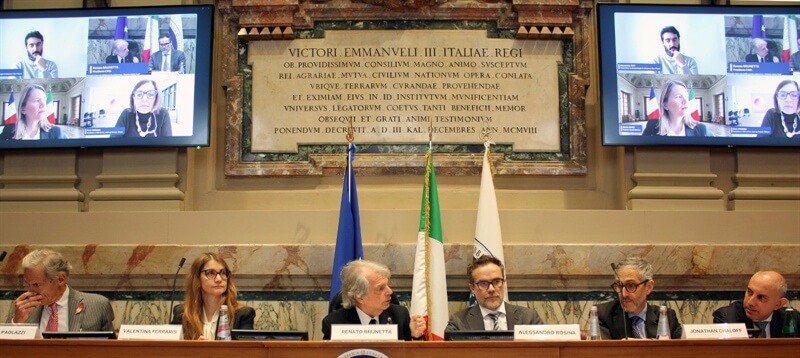
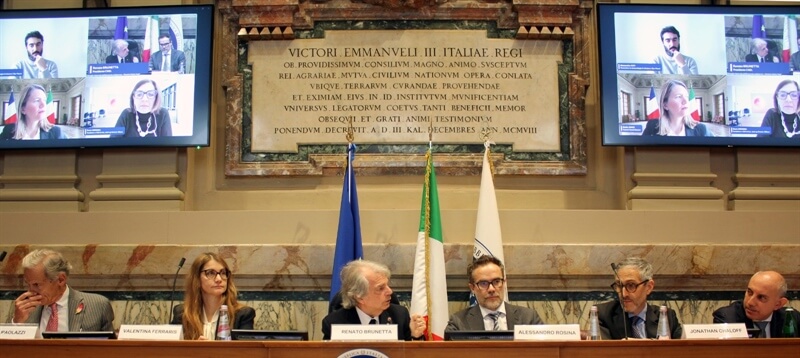
The first CNEL 2025 Report, “Italy’s attractiveness to young people from advanced countries”, curated by Valentina Ferraris and Luca Paolazzi, was presented at Villa Lubin.
The proceedings were opened by CNEL President, Renato Brunetta.
"Italy’s lack of attractiveness to young people from advanced countries," he stated, "is a litmus test for the cultural and economic delays that lower the standard of living for all inhabitants of the country. Becoming attractive to young people means addressing these delays. Narrowing Italy’s gaps in living and working conditions relative to other advanced countries means being able to retain young Italians and encourage their return, but it also means facilitating the arrival of top talents from around the world, in order to strengthen our position in the global competition of the knowledge economy".
THE FUTURE OF US ALL DEPENDS ON YOUNG PEOPLE
"There is much talk about young people, yet we still speak with them too little. And yet, the future of us all depends on young people. It is essential," added Brunetta, "to take great care in involving them and in giving them opportunities, responsibilities, decision-making autonomy, and trust. Does Italy do this? Not as much as it should. This is evident from the new wave of emigration that began in 2011, at the height of the sovereign debt crisis, and which has steadily grown since. Likewise, among young Italians abroad, the proportion of graduates—the pinnacle of human capital—has increased. For this reason, CNEL has decided to focus on Italy’s attractiveness to young people from advanced countries. Young people are the future embodied in the present. Their dreams, passions, energy and desire to experiment are the threads that make up the fabric in which the life to come is represented," he added.
GREATER ATTRACTIVENESS THROUGH A SHARED APPROACH
"Since there is no single specific reason behind young people’s decision to leave, the solution," emphasised the CNEL President, "must be holistic and involve the country’s entire leadership, both public and private: central and local governments, universities, businesses and trade unions. Greater attractiveness is built through a shared approach. In this perspective, CNEL aims to establish a permanent observatory on Italy’s attractiveness to young people, involving all relevant stakeholders, starting with institutional decision-makers. A place that can enhance the role of intermediary organisations, connecting their networks and channeling their expertise. We cannot afford the luxury of raising and educating young people—doing so with dedication and significant financial investment—only for them to decide to leave because we fail to provide them with the opportunities and quality of life they aspire to and can find elsewhere".
A PROGRESSIVE DECLINE IN THE YOUTH POPULATION IS OCCURRING
"A progressive decline in the youth population is occurring," continued Brunetta, "from around 15 million in the mid-1990s to just over 10 million in 2024, despite the arrival of almost two million young people from low-income countries, particularly from outside the European Union. The cause is, of course, declining birth rates: in 2025 we are expected to reach a new historic low since the Unification of Italy, likely falling below 350,000 newborns. At the start of this century, annual births still exceeded half a million. The few babies born today will become the few young people of tomorrow. And a significant proportion of these young people leave the country: the cumulative migration balance for 2011–2024 shows a loss of 441,000, exceeding the number of births each year. Considering 2024 alone, with a balance of -61,000, this is equivalent to one-sixth of that year’s births".
A NEW INTERGENERATIONAL PACT IS NEEDED
“As CNEL,” Brunetta reiterated, “we have outlined a fully fledged Youth Strategy, which forms an integral part of a coherent vision encapsulated in the concept of a ‘new intergenerational pact’. The objective is to enhance the role of younger generations in the country’s development and in the creation of national well-being. A crucial step in defining this new pact lies in direct engagement with young people; to this end, we have established the Forum of Young Economic and Social Forces. The aim is to address in a structured and comprehensive manner the issue of Italy’s attractiveness for younger generations”.
ASSESSING LEGISLATION BASED ON ITS IMPACT ON FUTURE GENERATIONS
“We have decided to introduce the Generational Impact Assessment (GIA) system for the acts and draft legislation approved by the CNEL Assembly. This is a decision of particular institutional significance. It is essential that this system be applied to all legislation enacted by the country’s various legislative authorities, through a ‘traffic light’ mechanism: a green light to indicate that measures fully account for their impact on future generations, a yellow light when such effects are only partially addressed and a red light when they are not considered at all. This transparent mechanism allows for a rapid understanding of the nature of legislative choices and helps ensure that long-term consequences are not overlooked,” he continued.
KEY PRIORITY AREAS FOR INTERVENTION: FROM WAGES TO THE COST OF LIVING, FROM MERIT TO WORKPLACE CULTURE
“In the Report,” said the President of CNEL, “we have identified six priority areas that require focused attention: wages, the cost of living – beginning with housing – innovation and research, workplace culture and meritocracy, quality of life, simplification and incentives to encourage return to the country. Regarding wage purchasing power, the primary responsibility lies with the social partners, who are expected to act through collective bargaining. Effective measures should also be explored through the redistribution of productivity gains based on merit, using transparent and fair methods for its assessment. Other key levers for action include the criteria for accessing public tenders, the growth and scaling of enterprises and internship and apprenticeship contracts, with the aim of restoring them to their original purposes”.
ITALY MUST SHOW YOUNG PEOPLE THAT IT TRULY BELIEVES IN THEM
“To improve quality of life, it is essential to promote a proper work-life balance. High-quality public services for families are also crucial, particularly in the educational sector. This includes support for early childhood and the alignment of school calendars and hours with those of countries that are more advanced in terms of attractiveness. Such measures would be especially beneficial for students disadvantaged by their family circumstances. Similar improvements are needed in local public transport, in a country with a densely populated territory. However, the first and most important step for the success of any policy aimed at enhancing attractiveness is to make young people fully aware that Italy has genuinely chosen to believe in them,” concluded Brunetta.
Italian-language content: Video intervention by the CNEL President (in Italian)
Full Report (in Italian)
Interventions following the introduction by President Renato Brunetta.
Luca Paolazzi, curator of the Report
Graduates are disproportionately represented among young people who leave Italy.
“What does the new wave of youth emigration tell us about the issue of low educational attainment in the Italian population? There are two schools of thought, almost echoing the historic divide between the Guelphs and the Ghibellines. The first, the supply-side perspective, argues that education is inadequate both in quantitative terms—since too few young people complete their studies and even fewer attend university—and in qualitative terms, as the Italian education system is unable to adequately prepare young people for the labour market. Employment, underemployment and skills mismatches are the key arguments advanced by this view. The second, the demand-side perspective, maintains that investing heavily in education in Italy does not deliver sufficient returns in terms of higher wages compared with those who exit education earlier. What we actually observe, however, is that among young people who leave the country, graduates account for a significantly higher proportion than among those who remain in Italy. This essentially indicates an oversupply of skills, with the core issue lying on the demand side”.
Valentina FERRARIS, curator of the Report
Even emigration of young people with lower or intermediate educational qualifications represents a significant loss
“I would like to make a clarification: in the Report, generally, when we discuss emigration, the focus is often on talent, skills and human capital, and sometimes somewhat unpleasant expressions are used, such as the ‘brain drain’. However, we must remember that we are talking about people, not organs. Focusing only on those with very high levels of education can give an incomplete picture. Indeed, over the past 14 years, two-thirds of emigrants were people with lower or intermediate educational qualifications. This raises the question: are these people without talent, worth less? In our view, certainly not. Choosing to emigrate in search of opportunities not found in one’s own country is, in itself, a display of initiative. In its own way, it is a form of talent, and therefore even in these cases it represents a significant loss that we must take into account. Moreover, it is a symptom of the Italian system’s inability to engage them and to go beyond mere educational qualifications in order to offer opportunities”.
Doris MESSINA, founder and CEO of tot., fintech start-up, Milan
Tech start-ups enable significant international exchange
“Dynamism, innovation and work–life balance are qualities sought after by the generations entering the workforce today. Italy is full of opportunities to excel, if these elements are respected, it becomes easier and more rewarding for young people to stay in their country of origin. Among the qualities most valued by young people today is the opportunity to make an impact on the world around them. In a start-up, one returns to the essence of why businesses exist, meeting this desire to play a role in society for the new generations. By their very nature, tech start-ups enable substantial international exchange and fulfil one of the most frequent requests of the new generations: the international connection and cross-fertilisation necessary for the development of skills, professionalism and networks, which are so highly valued today”.
Alessandro FOTI, researcher in Immunology & Infections, Max Planck Society, Berlin
Research funding remains insufficient
“Italy is not a country for graduates. There is limited investment in public research and the autonomy of universities is being reduced: a strategy that fails to attract talent. Despite the appeals of Italy’s main institutions, research funding remains insufficient, pushing an increasing number of young researchers to move abroad, where their work is more highly valued”.
Giuseppe PIERRO, Head of the Department for Youth Policies and the Universal Civil Service, Presidency of the Council of Ministers
Generational imbalances: a crucial issue for public policy
“Generational imbalances represent a crucial issue for public policy. In order to ensure that today’s decisions do not compromise the rights and opportunities of future generations, Law no. 167 of 10 November 2025 introduces two significant measures regarding intergenerational equity and responsibility towards future generations: the Generational Impact Assessment (GIA) and the National Observatory for the Generational Impact of Legislation”.
Alessandro ROSINA, CNEL adviser
Italy must become attractive to new generations
“In all advanced mature economies with which Italy compares itself, the size of the younger generations is steadily declining. Competition to attract well-educated or highly talented young people is therefore set to increase. Quantitative ageing (a smaller demographic weight) is closely linked to qualitative ageing (low education levels and underutilisation of human capital). Where investment in the younger generations is limited, young people risk having weak pathways into active life and careers, as well as fewer resources and conditions to form a family and have children. The risk is a gradual slide into a vicious circle: more NEETs (under 35s who neither study nor work), fewer births and an increasing number of young people compensating for the lack of social mobility with geographical mobility. The most dissatisfied are young women, who increasingly drive migration from internal areas to major centres, from the South to the North of the country and from Italy abroad. What they seek is not only higher salaries and better job opportunities, but also greater social rights and a more efficient welfare system. There is no doubt, therefore, that if Italy wants to be competitive in the 21st century and maintain a sustainable social and demographic structure, one of the main levers is to become attractive to new generations across its entire territory”.
Jonathan CHALOFF, Senior Policy Analyst, International Migration Division, Directorate for Employment, Labour and Social Affairs – OECD
Emigration rate of young Italian graduates to other OECD countries has increased
“Italy ranks 31st out of 38 OECD countries in terms of attractiveness to highly skilled workers and therefore struggles to attract young people from abroad or to retain those who grow up within the country. The emigration rate of young Italian graduates to other OECD countries increased significantly between 2011 and 2021, rising from 5.1% to 8.5%, as also occurred in other European countries. However, this is not merely a case of ‘brain drain’: many young people move abroad for study purposes and then do not return. The factors hindering their return are partly the same as those driving their departure: more favourable work and social opportunities elsewhere, the weakness of the family welfare system and gender inequality, which is improving only slowly”.
Giulia ZANZI, Vuarnet Brand Director
WHAT THOSE LIVING IN ITALY PERCEIVE AS CRITICAL ISSUES IS FELT EVEN MORE BY RETURNEES
“On the one hand, young people in Italy and across Europe are increasingly mobile and flexible; on the other hand, as they grow and gain experience, many develop a desire to return. When I speak at universities, I always say: ‘Go abroad, but then come back,’ because returning with a much richer set of experiences allows them to give back value to the country that invested in them before they left. I believe that most Italians abroad have the intention to return, but then they encounter the reality described by the CNEL Report. Everything that those living in Italy perceive as a critical issue is felt even more acutely by returnees. The fact that CNEL has addressed these topics is a very positive sign”.
Key findings of the Report.
BETWEEN 2011 AND 2024, 630,000 YOUNG PEOPLE EMIGRATED
In Italy, between 2011 and 2024, 630,000 young people (aged 18–34) emigrated, 49% from the northern regions and 35% from the South. The net balance, after accounting for immigrants, stands at –441,000. In 2024, 78,000 young people left the country. The net balance, after accounting for immigrants, is –61,000. In 2024, the number of expatriates represents 24% of the number of births. Overall, the young people who moved abroad between 2011 and 2024 correspond to 7% of the youth population residing in Italy in 2024.
AMONG YOUNG EMIGRANTS, THE FEMALE SHARE REACHES 48.1%
The female share of young emigrants in 2024 is 48.1%, up from the 46.6% average over the entire period. The highest female shares are observed in the North-East at 50.5%, followed by the North-West and the Centre at 49.3% and the South at 44.9%. Among regions and autonomous provinces, the highest values are in South Tyrol (52.5%), Trentino (51.5%) and Marche (51%), with Veneto, Emilia-Romagna and Tuscany above 50% and Lombardy just below. At the lower end are Campania (43.2%), Apulia (43.5%) and Sicily (44.5%).
42.1% ARE UNIVERSITY GRADUATES
University graduates accounted for 42.1% of young emigrants in the 2022–2024 period, up from 33.8% over the entire 2011–2024 period. Regions at or above the 50% mark include Trentino (50.7%), Lombardy (50.2%), Friuli-Venezia Giulia (49.8%), Emilia-Romagna (48.5%) and Veneto (48.1%). The lowest shares are recorded in Sicily (26.5%) and Calabria (27.2%).
WIDER GAP BETWEEN FEMALE AND MALE GRADUATES IN THE SOUTH
Regarding the female segment, university-educated women accounted for 44.3% of emigrants in 2022–2024, compared with 40.1% of men. The largest gap between the female and male share is observed in the southern regions, indicating that young educated women are more aware of the wider gender gap compared with the North and emigrate to overcome it. The differences are 9.5 percentage points in Campania (42.5% vs. 33.0%) and 9.4 points in Apulia (42.9% vs. 33.5%), 9.3 in Abruzzo (43.1% vs. 33.8%), 8.6 in Sardinia (37.8% vs. 29.2%) and 8.4 points in both Calabria (31.8% vs. 23.4%) and Basilicata (42.4% vs. 34.0%).
THE VALUE OF EXPATRIATE HUMAN CAPITAL AMOUNTS TO €159.5 BILLION
The value of human capital that has left Italy between 2011 and 2024 is estimated at €159.5 billion, calculated based on the net migration balance and the costs borne by families and, for education alone, by the public sector, to raise and educate young Italians who emigrated. €77 billion is attributed to the North and €58 billion to the South. The three regions with the highest values are Lombardy (€28.4 billion), Sicily (€16.7 billion) and Veneto (€14.8 billion).
7.5% OF GDP
In terms of GDP, the value of human capital that left Italy between 2011 and 2024 amounts to 7.5%. Measured in this way, the largest outflows are in South Tyrol (17% of GDP), followed by Calabria (16.6%) and Sicily (15.1%). The smallest is in Piedmont (2.3%), followed by Emilia-Romagna and Lazio (4.8%). The average annual weight in the 2022–2024 period is instead 0.8% of GDP. The increase in both the number and educational level of young Italian emigrants raised the annual value of outflows to €16 billion during this period. In GDP terms, the peaks are in South Tyrol (1.7%), Calabria (1.6%), and Molise (1.5%), while the lowest values are in Lazio (0.45%), Emilia-Romagna (0.54%) and Tuscany (0.6%).
NINE ITALIANS LEAVING FOR EVERY FOREIGNER ARRIVING
Nine Italians leave the country for every foreigner arriving. Between 2011 and 2024, there were 55,000 arrivals in Italy of young citizens from the ten leading advanced countries to which young Italians emigrate, namely, in alphabetical order: Austria, Belgium, France, Germany, Ireland, the Netherlands, the United Kingdom, Spain, Switzerland and the USA. During the same period, 486,000 young Italians moved to those same countries. Italy’s Synthetic Index of Migration Flows (SIMF) for young people stands at 9. The SIMF measures the attractiveness of a country or territory and is calculated as the ratio between its outflows to the main advanced countries and inflows from those same countries. The lower the SIMF, the greater the attractiveness, as this indicates that the number of young foreign arrivals is closer to the number of young Italians emigrating.
LOWER ATTRACTIVENESS IN SOUTHERN REGIONS
The southern regions show a high SIMF and therefore low attractiveness. High values in the North are recorded for Friuli-Venezia Giulia and Veneto. Here are the region-by-region figures:
- Tuscany 4.7
- Lazio 4.8
- South Tyrol 5.8
- Lombardy 6.2
- Liguria 6.4
- Emilia-Romagna 6.5
- Trentino 7.8
- Umbria 8.1
- Piedmont 8.1
- Molise 8.4
- Aosta Valley 9.4
- Friuli-Venezia Giulia 10.0
- Veneto 10.4
- Marche 12.6
- Abruzzo 13.6
- Sardinia 14.6
- Apulia 15.7
- Basilicata 18.9
- Campania 23.6
- Sicily 28.2
- Calabria 29.9
UNITED KINGDOM IS THE MAIN DESTINATION FOR YOUNG ITALIANS
The primary destination for young Italian emigrants is the United Kingdom, accounting for 26.5%. The second is Germany, at 21.2%, followed by Switzerland (13.0%), France (10.9%) and Spain (8.2%). The percentages vary considerably across different Italian regions. Almost half of young people from South Tyrol move to Austria, and over a quarter to Germany. From the South, departures are mainly to Germany (30.4%, with 39.1% from Sicily) and the United Kingdom (24.5%), followed by Switzerland (12.6%).
20% OF YOUNG EUROPEANS AND AMERICANS CHOOSE GERMANY
20% of young Europeans and Americans choose Germany, 16.9% opt for the United Kingdom, 15.4% for Spain, 15.1% for France, and 14.7% for Switzerland. Italy is chosen by only 1.9%, behind Denmark (3.2%) and Sweden (3.4%), which are, however, much smaller in terms of population and economy.
484,000 YOUNG PEOPLE MOVED FROM THE SOUTH TO THE CENTRE-NORTH
Between 2011 and 2024, a net total of 484,000 young Italians moved from the South to the Centre-North. Of these, 240,000 went to the North-West from other parts of Italy, 163,000 to the North-East, and 80,000 to the Centre. The largest outflows were from Campania (158,000), followed by Sicily (116,000) and Apulia (103,000). The top inflows were in Lombardy, with 192,000, followed by Emilia-Romagna (106,000) and Piedmont (41,000).
HUMAN CAPITAL TRANSFERRED FROM THE SOUTH TO THE NORTH AMOUNTS TO €147 BILLION
The young human capital transferred from the South to the North between 2011 and 2024 is estimated at €147 billion, of which €79 billion relates to university graduates, €55 billion to high school graduates, and €14 billion to those without a diploma. Lombardy is the region that received the most young human capital from internal movements, amounting to €76 billion, followed by Emilia-Romagna with €41 billion, Lazio with €17 billion, and Piedmont with €15 billion. Campania is the region that lost the most young human capital due to internal movements, with €59 billion. Next are Sicily with €44 billion, Apulia with €40 billion, and Calabria with €24 billion.
196,000 YOUNG PEOPLE LEFT CAMPANIA, 163,000 SICILY, 130,000 APULIA
Twelve thousand young people left Veneto for abroad or other parts of Italy, making it the least attractive region among the major northern regions, as it was unable to offset outflows to the rest of the world with net inflows from within the country. By contrast, the record number of young people leaving for other regions or abroad was 196,000 from Campania, followed by 163,000 from Sicily and 130,000 from Apulia.
A QUALITATIVE LEAP IS NEEDED FOR A NEW PHASE OF DEVELOPMENT
The CNEL study on the migratory flows of young people between Italy and other advanced countries is based on two fundamental questions: are these flows part of the normal circulation of movements existing among these countries? What factors push and attract young people? The findings of the Report are as follows: Italy does not participate in the circulation of movements, as it is a supplier of young people rather than a recipient; the factors differ significantly depending on the conditions of the places of departure and arrival, and the gap between these conditions. In other words, the differences between Italy and other advanced countries are one matter, while the differences with much poorer countries in terms of income, economic structure, and democratic and legal institutions are another. Italy can and must aim to close the first type of gap in order to achieve the qualitative leap that would enable a new phase of development.
ATTRACTIVENESS TOWARDS YOUNG CITIZENS OF ADVANCED COUNTRIES
Italy, like all advanced countries, is on one hand a destination for substantial arrivals of people from economically and institutionally poorer countries, seeking better work and life opportunities; on the other hand, every year tens of thousands of young Italian citizens leave for other advanced countries, without a corresponding number of young people arriving from those countries. It is this latter aspect that reflects negatively. In conclusion, Italy is part of international migration flows, but their disaggregation presents a less reassuring picture, showing low attractiveness for young citizens from advanced countries.
STRUCTURE OF THE CNEL REPORT
The CNEL Report frames recent migration dynamics, focusing on individuals aged 18–34, provides the demographic context, quantifies outflows and the net balance relative to inflows, details profiles by gender, place of birth, educational attainment, and regions of origin of new Italian emigrants, estimates the costs in terms of private and public investment for the education and development of young emigrants, also considers internal movements within Italy, ranks Italian regions based on their level of attractiveness as revealed by the choices of young Italians and foreigners, defines a new simple Index of Symmetry of Migration Flows (ISFM) as a measure of attractiveness, calculates the ratio between departures of young Italians and young foreign citizens from advanced countries (the ratio underlying the ISFM), and considers the circulation of young people within the main European countries.
NEW STATISTICAL INFORMATION
The Report also contains previously unpublished statistical information, as all data are disaggregated by macro-area, region, and province, with a high level of granularity. Moreover, it presents new perspectives, such as gender differences and the categorisation of young Italian emigrants by place of birth rather than by their place of residence from which they departed Italy. Finally, the Report includes the results of three opinion surveys among different groups of young people, in an effort to listen to their voices – the only true way to understand their motivations, challenges, perceptions, and aspirations.
THE VOICE OF YOUNG PEOPLE: THREE SURVEYS
Statistics capture the reality of the new Italian emigration in its various facets, but they reveal little about the factors that shape it – namely, the motivations, incentives, assessments, and
conditions of those who choose to emigrate. Understanding these factors is essential for designing targeted public and private policies to enhance Italy’s attractiveness for young people. The only way to gain this understanding is to interview the individuals concerned – the young people themselves – through opinion surveys, which are therefore as indispensable as data analysis. The CNEL Report includes three such surveys, differing significantly in methodology, target groups, and types of questions. Nonetheless, all convey the same message: Italy’s attractiveness for young people remains low.
STRONG INCLINATION TO MOVE ABROAD
The first survey was conducted among young people in Italy, Spain, France, Germany, and the United Kingdom regarding their desire or inclination to move abroad (much higher in Italy) and the attractiveness of Italy compared with their own country (consistently low, especially among young Germans). The survey confirms that young Italians rank better job opportunities as the primary reason for leaving, but not far above the greater efficiency of public systems, recognition of civil rights, and higher quality of life. For these responses, they are similar to young Spaniards, except regarding perceptions of respect for civil rights.
GREATER PROPENSITY TO EMIGRATE AMONG THOSE WITH HIGHER EDUCATIONAL QUALIFICATIONS
The second survey was conducted among a very specific, yet equally interesting, subset of young Italians: those from the Collegi di Merito, i.e., individuals who received support for their university studies based on merit and economic conditions. Only one-third of them currently live in Italy, with the rest having emigrated, confirming the higher propensity to emigrate among those with higher educational qualifications. Their assessments and motivations highlight deficiencies in meritocracy in Italy, dissatisfaction with Italian work experiences, and the pursuit of better career opportunities rather than higher pay. Those who chose to remain or return to Italy were primarily guided by personal and emotional reasons. Finally, the greater attractiveness of work abroad is certainly influenced by remuneration (determined on a meritocratic basis), but factors such as freedom to choose work methods, working hours, physical conditions of the workplace, relationships with management, corporate governance, and responsiveness to suggestions also play a significant role.
POLICY RECOMMENDATIONS
The final survey was conducted among Italians who have returned to Italy. They were asked, in light of their recent experience abroad, for policy suggestions, which have been included, together with other proposals, in the conclusions of the CNEL Report. These conclusions do not merely summarise the analyses carried out in the various chapters; rather, they primarily
outline an agenda for action. This can be seen as a kind of matrix, as it involves all the stakeholders forming the country’s leadership: national and local governments, universities, businesses, and trade unions.
Gallery